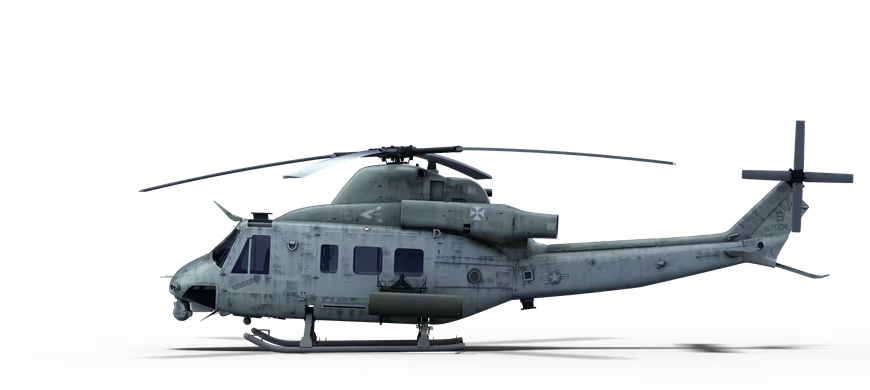
On October 20, 1956, Bell test pilot Floyd Carlson lifted the XH-40 prototype aircraft off the ground in Fort Worth, Texas. The Army named the production aircraft the Iroquois, later receiving its iconic nickname “Huey.”
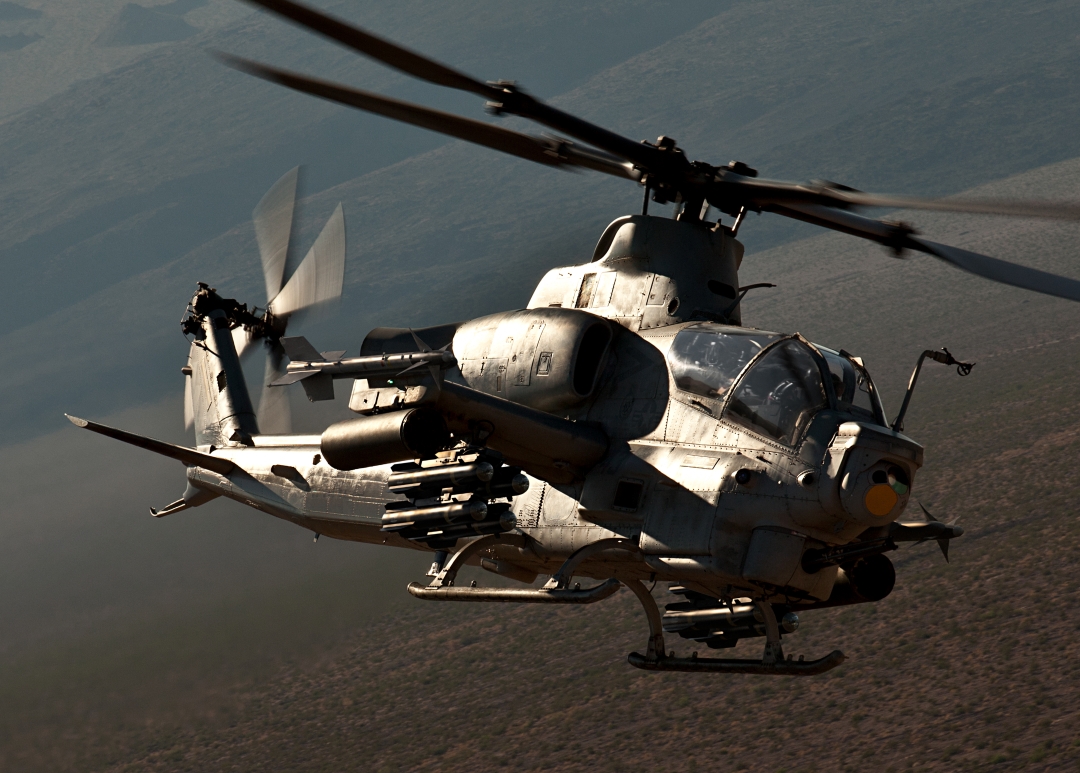
Today, seven decades later, the H-1 family is the longest-serving U.S. military rotorcraft lineage still flying. The latest variants of the H-1 family – the UH-1Y Venom and AH-1Z Viper – fly today with the U.S. Marine Corps and partner nations.


The Sound of a Generation
The H-1 legacy began in the Vietnam War. Made possible by the Huey, the Army began a new way of fighting called Vertical Envelopment that involved picking up troops, moving them quickly by helicopter, and inserting them in a location where they held the tactical advantage.
Hueys carried the wounded, too. In 1962, the Army’s 57th Medical Detachment brought the first five Hueys to Vietnam as air ambulances. For a generation of soldiers and Marines, the beat of a Huey’s rotor blades meant help was on the way. Bell built more than 16,000 of them.
If you look at the old footage from Vietnam, you would be hard-pressed to find a clip that didn’t have a Huey in it.
— Bill Hendricks, Director, Naval Sales & Strategy, Bell
Born to Protect: Introduction of the Cobra
Troop-carrying Hueys needed protection over the landing zone, and Bell moved quickly. Six months after design work began, test pilot Bill Quinlan flew the first AH-1 Cobra on September 7, 1965.
The Cobra was the world’s first dedicated attack helicopter, built for close air support . Its slim, tandem-cockpit design made it a smaller target for enemy fires. In total, more than 7,000 AH-1s were manufactured.
The pairing became the H-1’s defining partnership. Hueys carried the troops, Cobras protected them, and the two have flowntogether from Vietnam to Iraq and Afghanistan. Their legacy continues today in support of current operations across the globe.
H-1 70th Anniversary
Hear how that partnership carried into today’s fleet, from three of the Bell experts who support it.
Same Name, Different Machine
Today, Marine Corps light attack helicopter squadrons fly the UH-1Y "Venom" and AH-1Z "Viper" side by side.
On the flight line, their silhouettes are familiar. Up close, these are very different aircraft than their original production models. Viper and Venom are equipped with four-blade composite rotors, upgraded engines and transmissions, digital cockpits, and modern sensors and survivability systems. The two share 85% of their components, providing supply and training efficiencies for deployed units.
Learn more about Viper and Venom’s commonality: Bell AH-1Z & UH-1Y – A One Model Ecosystem to Optimize Commonality
The mission has grown, too. H-1s fly utility, attack, escort, reconnaissance, search-and-rescue and humanitarian missions, and they are becoming communications nodes that connect forces across the battlespace.
The H-1 Family Tree
1956 XH-40 first flight, Fort Worth
1962 First Hueys reach Vietnam with the Army’s 57th Medical Detachment
1964 Marine Corps fields the UH-1E
1965 AH-1 Cobra first flight
1971 Twin-engine era: AH-1J SeaCobra enters combat; UH-1N Twin Huey deliveries begin
1986 AH-1W SuperCobra joins the Marine Corps
2009 UH-1Y Venom’s first deployment
2012 First Marine squadron flying only the UH-1Y and AH-1Z (HMLA-267)
2028 Forecasted delivery of first SPINE upgraded H-1 aircraft
Built for the Next Fight
The H-1 evolution continues with SPINE, known as Structural and Power Improvements for NextGen Effects. For crews, SPINE — in conjunction with similar investments in survivability and communications equipment — will enable advanced tactics adapted to the modern battlefield. As a Series A capability enabler, SPINE will bring together digital interoperability, survivability upgrades, Link 16 and an advanced data bus for net-enabled weapons, keeping the fleet relevant into the 2040s.
Bell is currently contracted to upgrade up to 49 Marine Corps H-1s at our Amarillo Assembly Center, with first deliveries in 2028.
Partner nations are also flying H-1s. Both Czech Republic and Bahrain have a fleet of 12 aircraft, and in Amarillo, Texas, production is underway on the first of twelve AH-1Z aircraft for Nigeria.
These aircraft are not just history. What they represent is a living program that is committed to providing the warfighter with the most capable platforms possible.
— Bill Hendricks, Director, Naval Sales & Strategy, Bell
Family on the Flight Line
During Vietnam, many of the Bell employees building Hueys in Fort Worth had sons, brothers and friends flying them. Every aircraft had to do more than meet a spec. It had to bring someone home.
That bond still runs through the H-1 program. Walk through the halls of Bell today and you will meet people like these:
The maintainer. He spent years as a Marine keeping H-1s flying on deployment. Now he manages H-1 programs at Bell, and his son, a Marine, now flies on the aircraft family he once serviced.
The pilot. He remembers seeing his first Cobra at an air show, and later watching it change the fight in Fallujah. A former Cobra pilot and weapons and tactics instructor, he now helps shape the future of Marine Corps aviation.
The father. He works in H-1 sustainment, and his son is a young Marine officer in an H-1 squadron. When his son straps in, he is not just another customer. He is family.
Around them are teammates with 20, 30, even 40 years on the H-1 program, working beside engineers in their first. The people who fly and fix these aircraft tell us what the mission demands, and together we build it in.
On October 20, we honor everyone who designed, built, flew, maintained and supported the H-1, and the next generation stepping to the aircraft. Seventy years in, the H-1 is still on station.
Share Your H-1 Story
Flew one, fixed one, built one or rode in one? We want to hear from you. Share your H-1 story and photos on social with #H1at70 and tag Bell.
对Bell Insights感兴趣?
抢先了解尚未公布的贝尔独家更新信息、视频和飞机新闻。立即参与垂直升降机的未来。