
Air Zermatt 为何依赖Bell 429进行高海拔救援
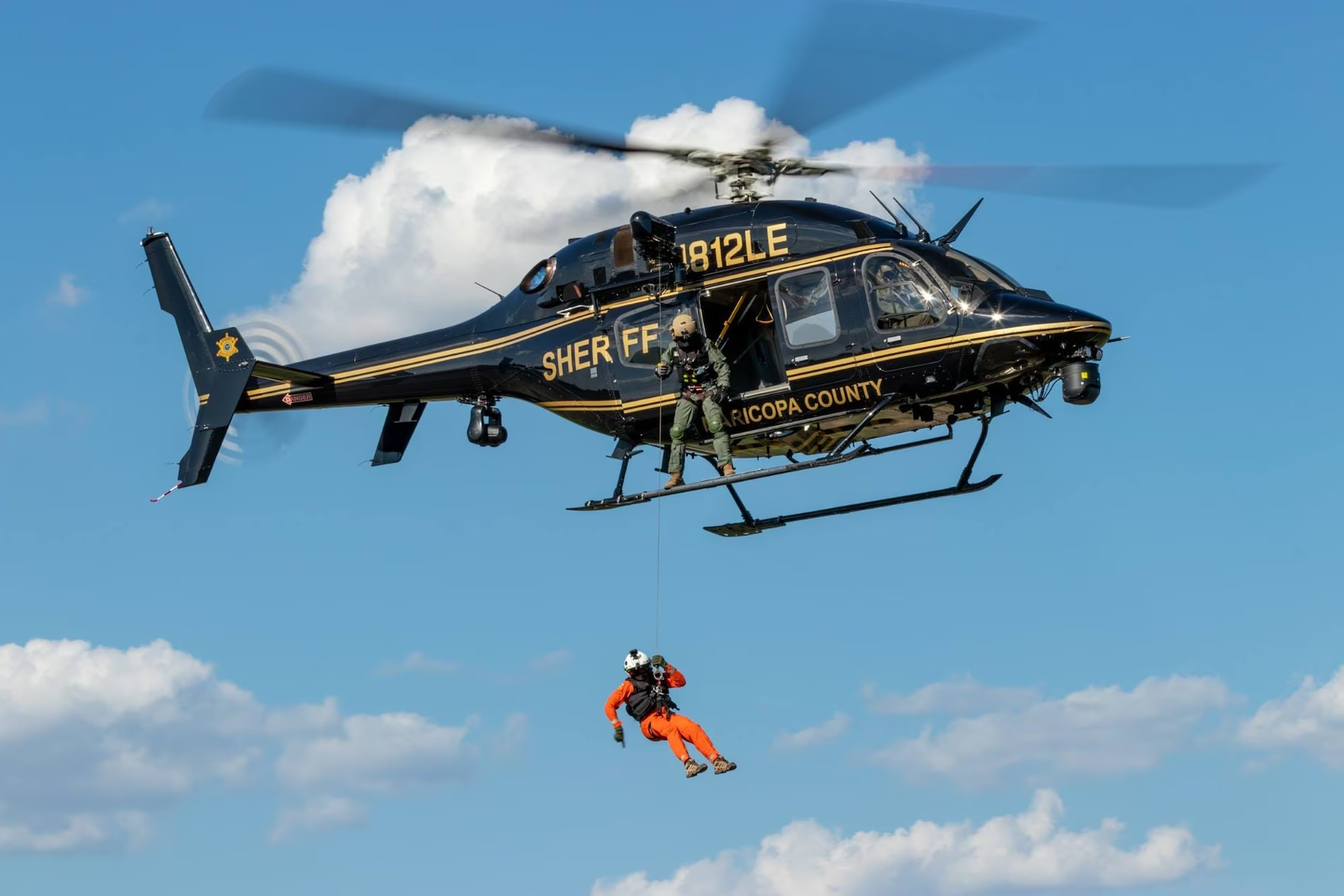
These are long, long days, long hours, long days of work, but flying, rescue -- give people help, rescue them. That was the reason I wanted to do this. For the rescue missions, we are happy to have the Bell 429, because it's a powerful, twin-engine helicopter, which is mandatory for the rescues, especially here in this terrain, in the Alps. We have no chance to get to our patients any other fashion -- walk to the patients, or hike, or make a terrestrial rescue, which takes hours or days by means of the helicopter, we can reach the patient within minutes. And we also have long distances to the hospitals, so it's also an important tool to get the patients not only from the mountains down here, but also the patients from the valleys to the main medical center. So it's a very powerful instrument for us. We need to perform almost every kind of medicine, but still we have the opportunity to keep the weight low and to perform the technical rescue as well. So we have an ICU respirator, a monitor integrated with the defibrillator, so we can do cardiac pacing, we can defibrillate, we can send ECGs by email directly to the hospital so the time is shorter to get to the cath lab. And we have syringe pumps for patients -- often when we do ICU transfers, that they have continuous medication running. We had one mission where a climber fell down over 500 meters on steep ice and he survived, badly injured. He was lucky in a way that his fall was observed, and we were on scene about 15 minutes later because of the rescue time and all the equipment we carried -- we could do a full resuscitation on scene, and we transferred the patient to one of the major university hospitals, and he's doing quite well even after that fall. When you have done four and a half thousand rescue missions, it's difficult to take one particular rescue mission out, but what we have is we always remember the last one -- one of my last ones was up at 14,000 feet, where we had up to 60 knots of winds, and we had to rescue a badly injured climber who fell down 60 meters. So we had to use a 100 and 30-meter-long rope, more than 350 feet of line, and there you try to find the best position in wind where it's still laminar -- and of course, in this situation, the Bell is such a stable bird, it's amazing. If we talk about comfort for us as the medical team, and of course for the patient, this helicopter is very stable, even in high winds, so that makes this helicopter a unique thing. And we love it -- it's time-saving, it's cost-saving, and it's life-saving. That's a big advantage of a helicopter.


对Bell Insights感兴趣?
抢先了解尚未公布的贝尔独家更新信息、视频和飞机新闻。立即参与垂直升降机的未来。